


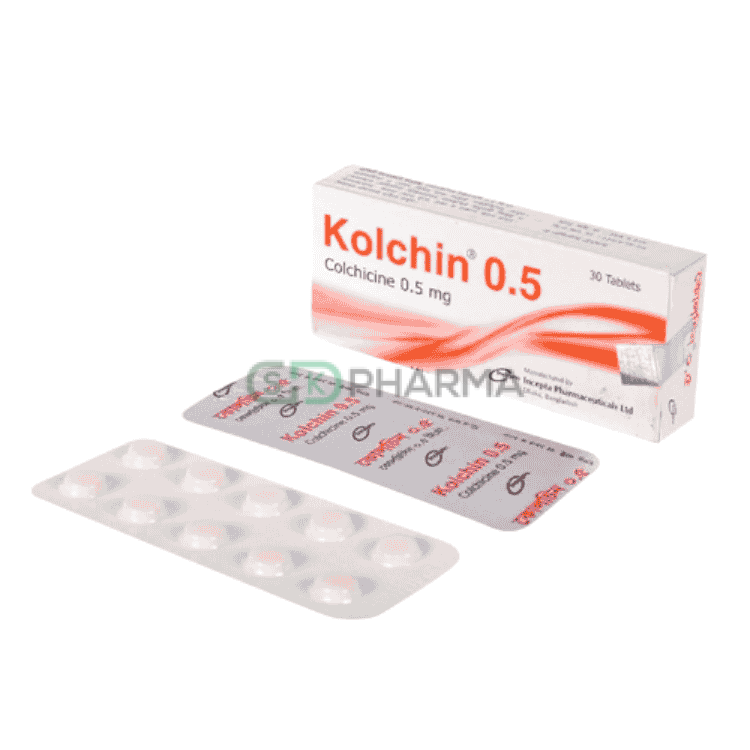
Kolchin Tablet 0.5 mg (Colchicine)
-
 ৳5.64
৳5.64৳6.00 -
৳8.46
৳9.00 -
৳32.90
৳35.00 -
৳9.26
৳10.07


Reviews & Ratings
Kolchin 0.5 mg is an oral medication used in the management of acute gout flares and Familial Mediterranean Fever (FMF) in adults and children aged 4 years or older. The active ingredient works by interrupting the inflammatory cycle triggered by urate crystal deposition, reducing pain, redness, and swelling in affected joints. It is rapidly absorbed and has a predictable pharmacokinetic profile, making it effective for both acute attacks and long-term prophylaxis.
রেজিস্টার্ড চিকিৎসকের পরামর্শ অনুযায়ী ঔষধ সেবন করুন
Therapeutic Class
Drugs used in Gout
Indications
Kolchin 0.5 mg is indicated for:
-
Acute Gout Flares: Relief of pain and inflammation associated with acute attacks of gouty arthritis.
-
Familial Mediterranean Fever (FMF): Prevention and treatment of attacks in adults and children 4 years or older.
Pharmacology
Acute gout arises from inflammatory reactions to monosodium urate crystals deposited in joints. Kolchin 0.5 mg inhibits the phagocytosis of urate crystals by leukocytes and reduces lactic acid production, thereby halting the inflammatory cycle. It is orally absorbed, reaching peak plasma concentrations within 1–2 hours, and has low serum protein binding. Metabolism occurs mainly via CYP3A4 to inactive demethylated metabolites, which represent less than 5% of total plasma levels. The elimination half-life ranges from 26.6 to 31.2 hours.
Dosage and Administration
Acute Gout Flares:
-
Initial dose: 1–1.2 mg (two 0.5 mg tablets) every 2 hours until pain and inflammation are controlled
-
Typical total dose per attack: 4–8 mg
-
Pain and swelling usually reduce within 12 hours and resolve in 24–48 hours
-
Allow at least a 3-day interval between courses to reduce cumulative toxicity
Prophylaxis During Intercritical Periods:
-
Patients with fewer than one attack per year: 0.5 mg daily, 3–4 days per week
-
Patients with more than one attack per year: 0.5–0.6 mg daily
-
Severe cases: 1–1.5 mg daily in divided doses
Perioperative Prophylaxis for Gout:
-
0.5 mg tablet three times daily for 3 days before and 3 days after surgery
Administration:
-
Taken orally with or without food
Drug Interactions
-
CYP3A4 or P-gp inhibitors (e.g., clarithromycin, cyclosporine) may increase Kolchin concentrations.
Contraindications
-
Patients with severe renal or hepatic impairment when used with strong CYP3A4 or P-gp inhibitors.
-
Known hypersensitivity to the active substance or related drugs.
Side Effects
-
Hematologic: Myelosuppression, leukopenia, granulocytopenia, thrombocytopenia, aplastic anemia
-
Gastrointestinal: Diarrhea, nausea
-
Other: Pharyngolaryngeal pain
Pregnancy and Lactation
-
Pregnancy Category C: Use only if benefits outweigh risks
-
Excreted in breast milk: Exercise caution in nursing mothers
Overdose
-
Toxicity may occur at doses as low as 7 mg over 4 days; fatalities reported in extreme cases
-
Symptoms: Gastrointestinal upset, myelosuppression, severe cases may involve hypokalemia and multi-organ effects
-
Management: Supportive care, elimination of unabsorbed drug; dialysis is not effective
Precautions
-
Use caution in patients with impaired renal or hepatic function
-
Monitor for signs of blood dyscrasias with prolonged use
-
Avoid concomitant strong CYP3A4 or P-gp inhibitors in susceptible patients
Storage Conditions
-
Store below 30°C in a dry place, protected from light and moisture
-
Keep out of reach of children
Related Products


Minocin Tablet 100 mg (Minocycline Hydrochloride)

Breathlin SR Tablet 200 mg (Theophylline)

Recof Pediatric Drop 6 mg/ml Ambroxol Hydrochloride)
Delaxin Injection 300 mg/vial (Delafloxacin)

Aciflox Tablet 200 mg (Sparfloxacin)
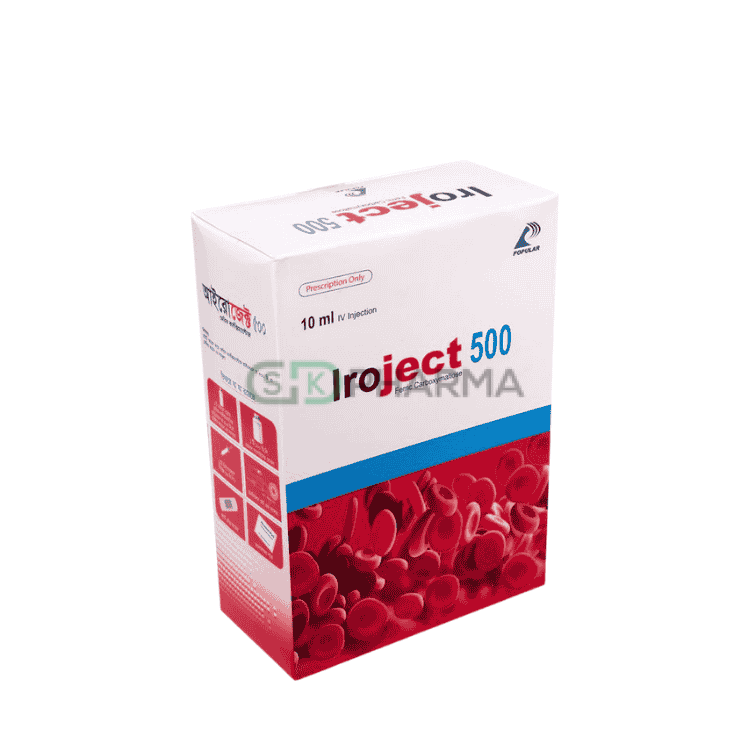
Iroject Injection 500 mg/10 ml (Ferric Carboxymaltose)

Ofran Oral Solution 4 mg/5 ml (Ondansetron)

Lamogin Tablet 2 mg (Lamotrigine)
Product Queries (0)
Login Or Registerto submit your questions to seller
Other Questions
No none asked to seller yet
-
৳5.64
৳6.00 -
৳8.46
৳9.00 -
৳32.90
৳35.00 -
৳9.26
৳10.07


